Elissa Miolene

The Wall Street Journal
The first shipment of grain to leave Ukraine’s key Black Sea ports since the Russian invasion is expected to dock this week in Lebanon, where food inflation is the highest in the world.

Most of the employees agreed to speak on the condition of anonymity due to fears of professional reprisal — but over and over again, they spoke of the same.
A workplace marred by risk, and a culture that let safety slide to the periphery. A lack of training, and a pattern of pushback when staff members tried to put those activities in place. And a tendency to “build the plane while flying it” across the world.

In a small windowless room in the basement of the British Museum sit some of the holiest relics of the Ethiopian Orthodox Church: 11 small wooden plaques called Tabots that are considered by Ethiopian Christians to
contain God's presence.

SAN FRANCISCO CHRONICLE
From 2020 to 2021, 44 Afghan children were enrolled in kindergarten through 12th grade. But in the academic year following, that number shot to 144. The 227% increase left the school system scrambling.
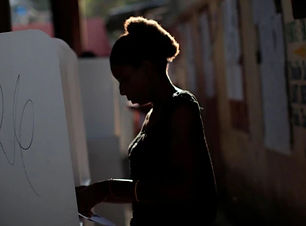
When the U.S. Agency for International Development began to crumble, democracy promotion was the first thing to fall apart.
Almost immediately, every program within the country’s global election monitoring system was canceled. The National Endowment for Democracy, which supports the core of U.S. democracy efforts, was blocked from all its funding. The U.S. Agency for Global Media, which promotes independent journalism across the world, was deemed “unnecessary.”
And the country’s most impactful pro-democracy organizations — including the International Republican Institute, a GOP-backed group once championed by Secretary of State Marco Rubio — have been left hanging by a thread.

Angeline and her lawyers are tangled in a federal asylum logjam, one exacerbated by Cameroon’s criminalization of her sexuality, shifting immigration policies in the United States and an ever-climbing backlog at U.S. Citizenship and Immigration Services.

Though assistance began to trickle back to Tigray late last month, the world is still scrambling to figure out who’s to blame. But for many, the answer is obvious.
Everyone is to blame. And that’s nothing new.

SAN FRANCISCO CHRONICLE
Early in the COVID-19 pandemic, East Bay Dr. Stephanie Brown began noticing a startling trend. Many of her Black patients were getting worse, even while their oxygen measurements said the opposite.

In Yemen, millions of children are on the brink of starvation.
It’s the result of a decade-long conflict; one that has fractured Yemen’s health care system and led to soaring levels of inflation, poverty, and displacement. For years, one organization has been filling the gaps, connecting malnourished children with the treatment they need to survive.
But on Jan. 24, that work was frozen by the U.S. government. And despite submitting a waiver — an exemption that supposedly would allow lifesaving assistance to continue — the organization hasn’t heard a word.

The first day that Donald Trump returned to the White House, the president used his inaugural address to make a promise.
“We will measure our success not only by the battles we win, but also, by the wars that we end. And perhaps most importantly, the wars we never get into,” said Trump, speaking from the Capitol rotunda on Jan. 20. “My proudest legacy will be that of a peacemaker and unifier.”
But today, the peacebuilding effort created during his first presidency — the Global Fragility Act — is hanging in the balance. The State Department bureau that once spearheaded that act is facing elimination, while the U.S. Agency for International Development, one of the initiative’s key players, has been all but dismantled.

THE SAN JOSE MERCURY NEWS
It had been nearly a decade since the retired Salinas teacher found out her benefits package had been miscalculated — and nine years since CalSTRS, the teachers’ state retirement agency, told her that she owed them $75,000.

Every day, the staff members at half a dozen medical clinics in Sudan do their rounds. They go crib to crib, connecting 100 babies on the brink of starvation with the IVs, oxygen, and emergency feeding they need to survive. They do that work as conflict spirals — and in a country that the U.S. government recently declared was home to a genocide.

THE SAN JOSE MERCURY NEWS
The Hofionis are among hundreds of Afghans who have arrived in the Bay Area since August. When they first landed in California, they were greeted by resettlement agencies, non-profits and the government, all of whom tried to help them do the nearly impossible: find an affordable home in one of the country’s most expensive housing markets.

For nearly two weeks, the hits have been ceaseless.
First, a 90-day pause on all foreign development assistance. Then, a gag order to keep the U.S. Agency for International Development staff from talking about it. And after that, a halt of nearly all USAID-funded programs — a move that’s thrust thousands of the agency’s partners into free fall.
“I’ve got people crying. I’ve got people not knowing whether they have a job or not,” said the leader of one humanitarian organization, which receives more than half of its funding from USAID. “I have people saying: but we really need to send these medicines. Are you telling me I can’t do that?”

THE SAN JOSE MERCURY NEWS
For years, schools across California have been supported by parents, communities and education funds, groups which have long filled the gaps between what students need and what the state provides. Depending on the wealth of the community around those schools, those gaps might be filled tenfold or not at all — fueling a widening chasm between the haves and have-nots in California’s public schools.